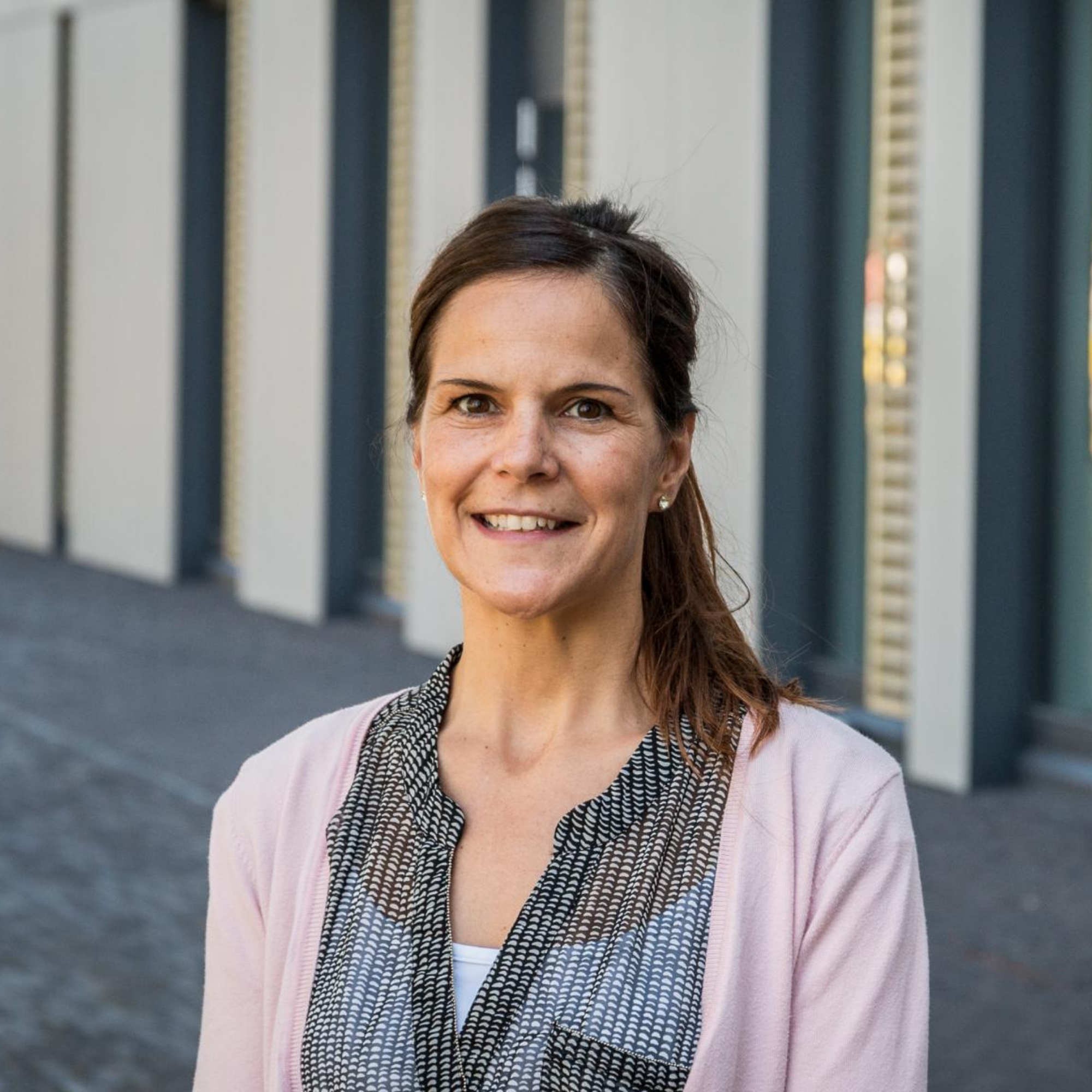
Dr Sandra Biewers Grimm is a pedagogue with a Master’s degree in Social Management and a Postdoctoral Researcher at the Centre for Childhood and Youth Research (CCY) at the University of Luxembourg.
Y-Local: Youth-Friendly Communes in Luxembourg
Understanding what makes local environments meaningful, supportive and attractive for young people
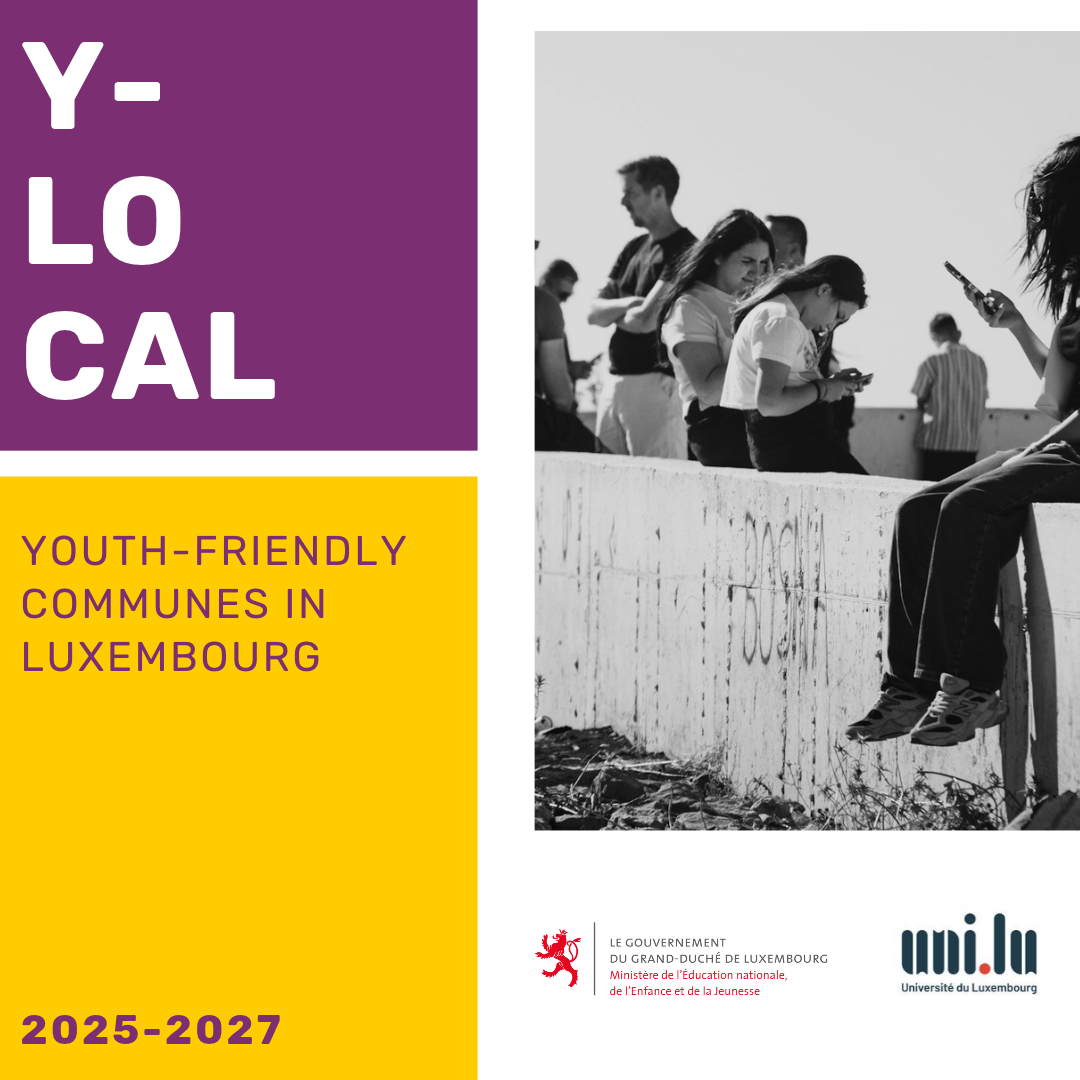
Y-LOCAL (Youth-Friendly Communes in Luxembourg) is a two-year empirical research project conducted by the Centre for Childhood and Youth Research (CCY) at the University of Luxembourg and funded by the Service national de la jeunesse (SNJ). Running from autumn 2025 to autumn 2027, the project undertakes empirical fieldwork in participating communes in autumn 2026. First insights are expected around the end of 2026 and beginning of 2027, with final findings published, disseminated and discussed collaboratively with stakeholders and the wider community in autumn 2027.
Jump to content
Contemporary youth realities
Young people experience local life through an interconnected world of places, relationships, opportunities, mobility, services, digital environments and possibilities to participate. Feelings of belonging, recognition and support take shape through these everyday experiences, as do young people’s possibilities for imagining and building futures for themselves.
The National Report on the Situation of Young People in Luxembourg 2025 provides an important point of departure. It portrays young people’s lives as increasingly interconnected across online and offline worlds, with digital technologies woven into education, relationships, identity, leisure and participation. The report also highlights evolving pressures associated with well-being, psychosomatic concerns and wider social and economic conditions, while foregrounding young people’s resources, coping strategies and diverse forms of engagement.
The result is a picture of young people’s lives as rich, full and densely layered, shaped by relationships and possibilities as well as by demands, transitions and uncertainties. This makes systematic attention to local environments particularly important:
Communes are indeed important places where mobility, space, relationships, participation, support and belonging come together.
Luxembourg offers a particularly rich context for this inquiry. Its communes vary in size, geography, infrastructures, accessibility and local actor networks, while young people grow up within a highly diverse, multilingual and transnational society. In 2025, both the National Youth Report 2025 and STATEC reported that around 47% of Luxembourg’s resident population held a non-Luxembourg nationality, while multilingualism, cultural diversity and transnational family networks form part of the everyday context in which many young people grow up.
These characteristics make the local level a particularly meaningful setting for examining how young people experience belonging, participation, mobility and opportunity in everyday life. For Y-LOCAL, youth-friendliness takes shape in everyday municipal life: in the places young people inhabit, the relationships they build, the opportunities they encounter and the ways they experience support, mobility, participation and recognition.
Youth-friendliness in everyday local life
Luxembourg’s communes already provide a wide and rich range of youth-related services, activities, infrastructures and opportunities. Yet, the presence of an offer does not necessarily mean that it is accessible, meaningful or even visible to the young people for whom it is intended.
For example, a participation structure may exist without young people feeling that their views matter; a public space may be technically accessible while some young people feel unwelcome there; a youth service may be highly valued by those who use it while remaining largely unknown to others; and, some of the people or places that matter most in young people’s everyday lives may sit entirely outside formal youth structures.
Y-LOCAL therefore asks about what is available as well as how local life is actually experienced. It examines how opportunities are encountered and given meaning in everyday life. A particular interest therefore lies in what Y-LOCAL calls recognition gaps:
Differences that may emerge between how young people understand themselves, their needs and their local lives, and how adults, institutions or local actors understand “their youth”. Who is visible and who is more difficult to reach? Which places, relationships and opportunities matter to young people themselves? How do institutional understandings align with young people’s lived experiences?
Y-LOCAL takes young people’s lived expertise as its primary point of departure. Bringing their perspectives into dialogue with those of municipal and local actors makes visible how youth-friendliness is experienced, understood and produced in everyday communal life. This leads to Y-LOCAL’s central research question:
What does a youth-friendly commune look like from the perspective of young people?
The project approaches this question through several interconnected dimensions of local life. It explores well-being and belonging; experiences of services and infrastructure; meaning and identity; relationships and important local anchors; participation and responsiveness; and the role of space.
It considers whether young people feel welcomed, valued, safe, connected and able to develop locally; how they experience youth services, cultural and sporting opportunities, mobility, information and other infrastructures; and how they understand themselves in relation to the places in which they live.
The project also examines relationships with peers, adults, youth workers, local actors and other people who may function as important anchors in everyday life. And, it asks about opportunities for voice, dialogue and co-creation.
Moreover, Y-LOCAL pays particular attention to space. Public squares, parks and streets matter, as do semi-public places, youth centres, cafés, sports facilities, transport routes, informal meeting places and digital environments. The project thus examines how young people move through, use, interpret, appropriate, avoid and give meaning to the spaces in their local environments.
Building local panoramas: a multi-perspectival view
Y-LOCAL is designed as a qualitative multi-case study involving 6–8 communes selected to reflect a broad range of local realities in Luxembourg. Each commune is developed as a case and local panorama in its own right, allowing its particular spatial, social, relational and institutional environment to be understood in depth, then brought together with the others to build a wide outlook.
Young people’s lived experiences form the empirical centre of these panoramas. Around this centre, the study brings together perspectives from municipal and local actors and from key figures identified by young people themselves—people who may work within formal youth structures, but who may equally be situated outside them. Commune-level information and documents provide an additional contextual layer, helping situate these perspectives within the demographic, spatial, infrastructural and institutional environment of each locality.
Together, these layers build a situated picture of each commune: its local ecology and the ways in which spaces, relationships, structures and opportunities intersect in young people’s everyday lives.
Researching everyday life differently
To explore young people’s local lifeworlds in their richness and complexity, Y-LOCAL uses multimodal, arts-based and youth-centred methods that invite participants to express, document, interpret and communicate their experiences in different ways.
Young participants work with maps of their communes to identify meaningful routes, meeting places, barriers and emotionally significant spaces. Through photo journeys, they document aspects of everyday local life that feel welcoming, supportive, difficult, missing or personally meaningful. Collaborative collage and futurising activities allow groups to reflect on their current environments and imagine what a youth-friendly local future could look and feel like.
These visual and participatory approaches engage with what young people notice, use, value, avoid, remember and imagine. They also produce research materials that can “travel”: maps, photographs, collages and other collective visual outputs can become resources for dialogue between young people, communes, youth-sector professionals, researchers and policy actors.
From local experience to shared knowledge and possibilities
Y-LOCAL aims to generate knowledge that is both scientifically grounded and useful in practice.
For participating communes, the project will develop context-sensitive panoramas of young people’s local experiences, highlighting strengths, valued spaces and relationships, barriers, emerging needs and possibilities for further development. Across the local panoramas, Y-LOCAL will also identify practices, conditions and approaches that may offer inspiration in other settings. The intention is to develop research-informed ideas and points of orientation that can be shared, discussed, adapted and further developed collaboratively, while remaining responsive to the particular realities of different local contexts.
Expected outputs include commune portraits or panoramas, visual materials created with young people, research and policy publications, stakeholder feedback and evidence-based recommendations. In this way, young people’s lived expertise becomes a resource for reflection, dialogue and action across Luxembourg’s communes and youth sector.
Connecting to youth research in Luxembourg
Y-LOCAL forms part of a wider tradition of research at the Centre for Childhood and Youth Research (CCY) concerned with young people’s lifeworlds, participation, well-being, youth work and local environments. It complements representative national research such as the Youth Survey Luxembourg and the National Youth Report by adding an in-depth, place-based perspective on how wider developments are experienced within particular local settings. Y-LOCAL also connects with research on municipal participation and non-participation in Young People in Esch-sur-Alzette (YES) and with research into professional understandings of youth work in Perspectives on Youth Work in Luxembourg (PYL), alongside earlier CCY work on local youth planning and young people’s relationships with social and spatial environments.
These connections sit within a broader portfolio of CCY research on childhood and youth, which can be explored here. Together, these different strands of research contribute to a more nuanced understanding of young people’s lives in Luxembourg and of how local environments can engage with the diversity of their everyday experiences.